

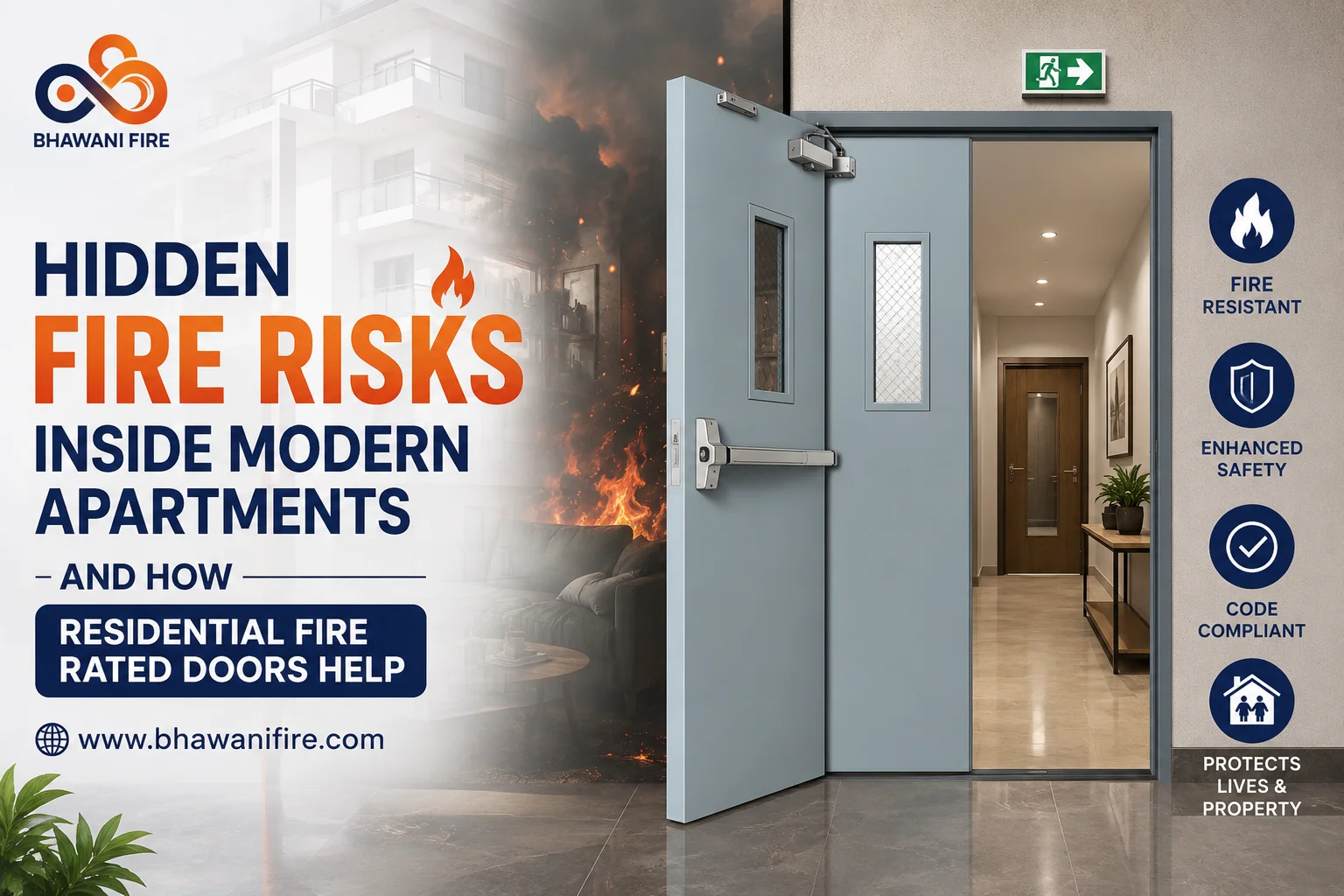
Modern apartments are packed with conveniences, from modular kitchens and smart appliances to hidden wiring and premium interiors. While these are essential to improve daily living, at the same time, they also hide potential fire hazards. Many residential fires begin unexpectedly and spread within minutes, leaving very little time to react. This is why the installation of residential fire rated doors has become an important part of modern building safety.
They don’t stop a fire from starting, but they can stop it from spreading too quickly. Most homeowners are opting for it, considering the hidden fire hazards and the risk associated with them. In this blog, we will share about common hidden fire risks that occur in modern apartments and how fire rated doors help.
Common Fire Risks inside Modern Apartments
Not every fire begins because of a major accident, especially inside residential apartments. In many, the danger comes from everyday habits and hidden electrical systems. And if proper fire barriers are missing, the smoke and flames can move rapidly through corridors, staircases, lift lobbies, and service shafts in high-rise buildings. Some of the most common fire risks include:
- Overloaded power sockets and extension boards
- Mobile phones and laptops charging overnight
- Faulty wiring behind false ceilings or walls
- Cooking left unattended in modular kitchens
- Inverter batteries and electrical panels
- Overheated air conditioning units
How do residential fire rated doors improve safety?
Residential fire rated doors help limit the spread of fire and smoke inside a building. Unlike ordinary doors, it is designed and tested to withstand high temperatures for a prolonged period while creating a protective barrier between different areas of the home. It helps improve safety in several ways, including:
- By slowing the spread of fire from one room or apartment to another.
- It restricts smoke movement to keep escape routes clear for a long time, for easy movement and evacuation.
- Fire doors help provide occupants with valuable extra time to evacuate safely.
- When installed in the right places, they protect staircases, corridors, and other emergency exit paths.
- It helps reduce damage to nearby rooms by containing the fire.
- Most importantly, it helps builders and homeowners meet applicable fire safety standards which has become mandatory in many cities and localities due to rising fire accidents.
- These doors enhance overall safety without affecting the functionality or appearance of modern apartments.
Where residential fire rated doors should be installed?
Proper installation of fire rated doors is as important as choosing the right fire rated door. They should be installed at:
- Apartment entrance doors
- Staircase entry points
- Electrical and utility rooms
- Basement access areas
- Common corridors in residential complexes
Conclusion
To keep our apartments protected from these common fire hazards, the installation of residential fire rated doors has become a necessity. They help prevent fire, contain smoke for a long time, and offer ample amount of time to call fire extinguishers or to evacuate safely. But to ensure that it works well during fire accidents, buying them from top fire door manufacturers is necessary. We at Bhawani Fire Protection Pvt. Ltd., are certified manufacturers offering fire rated doors that are known for strength, durability and reliable performance, making them suitable for apartments, residential towers and housing projects.
FAQs – Frequently Asked Questions
Yes, they help contain fire within one area, reducing its spread to other parts of the building.
Their requirement depends on the building design and applicable fire safety regulations.
They are usually installed at apartment entrances, staircases, utility rooms and electrical rooms.
We provide durable, tested and reliable residential fire rated doors that support safer residential buildings.