

When it comes to fire safety, a fire door acts more than an entryway. It acts as a critical barrier that helps contain fire and smoke for several minutes. It allows occupants more time to evacuate safely and reducing property damage. However, this works only when you have purchased them from reliable fire door manufacturers who follow strict testing procedures before their products reach the market. In this blog, we are sharing details about fire door testing process that most trusted manufacturers follow. Knowing this will help architects, builders, and property owners make right decisions when selecting fire-rated doors.
Why fire door testing matters?
Fire doors are designed to resist fire for a specified period, such as 30, 60, 90, or 120 minutes. However, these ratings are only valid when the complete door assembly successfully passes standardized fire-resistance tests. Testing ensures that the door can withstand extreme temperatures, prevent the spread of flames, and limit smoke transfer during a fire emergency.
Material Inspection and Quality Assessment
The testing of fire doors begins with a quality inspection of raw materials used in manufacturing it. Manufacturers verify the quality of steel, core materials, insulation, seals, hinges, and hardware components. Any compromise in material quality can affect the door’s ability to perform under fire conditions. Therefore, strict quality checks are conducted before production begins.
Dimensional Accuracy Testing
Fire doors must be manufactured according to precise specifications. Fire door manufacturers must check door thickness, frame dimensions, and alignment. Proper dimensions ensure that the door closes correctly and maintains its fire-resistant integrity during an emergency. If it is not an standard size door, architects or builders must share the dimension with manufacturers beforehand.
Fire Resistance Testing
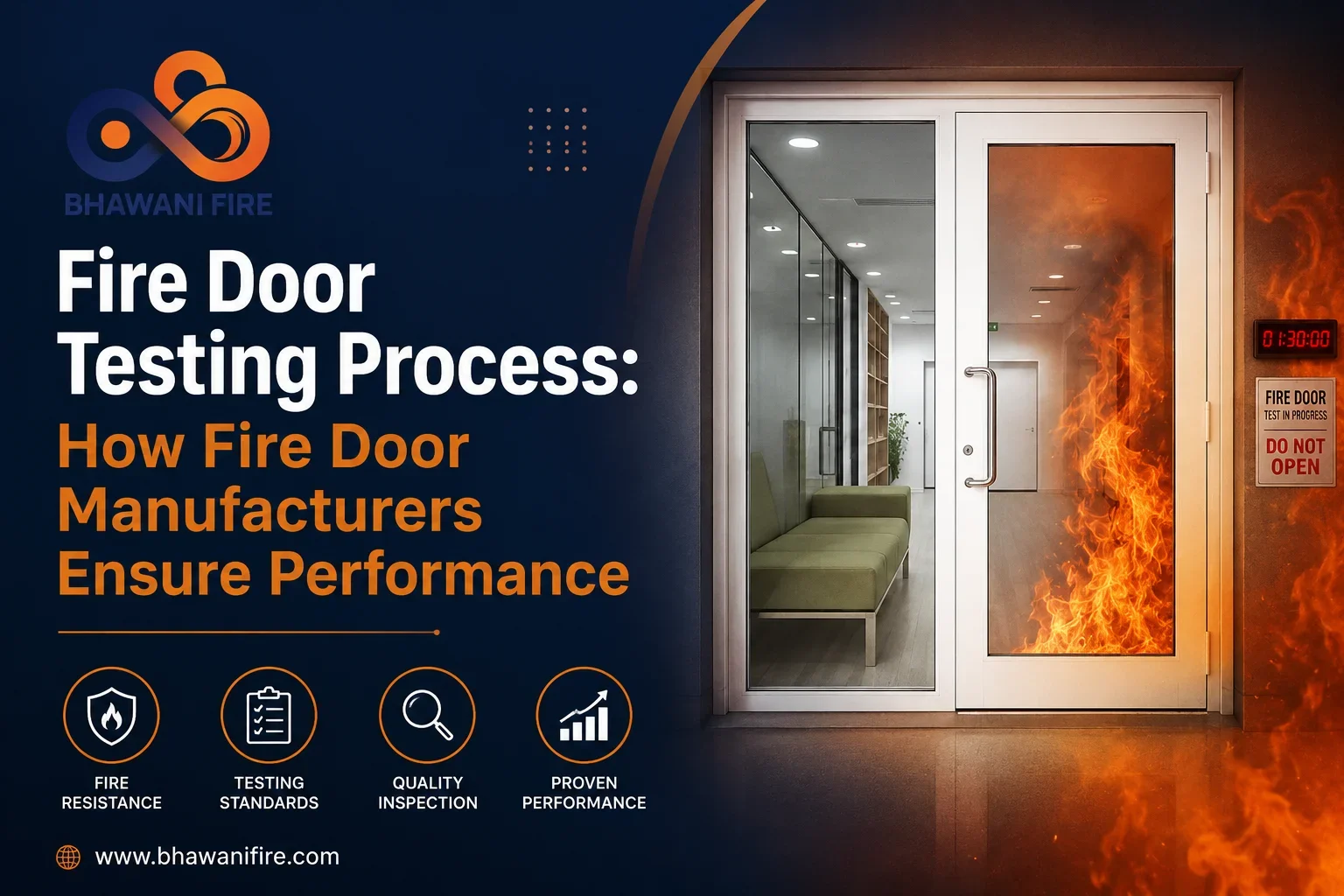
This is the most critical stage of the testing process as it determine whether the door will perform well during fire accident or not. The fire door assembly is installed in a specialized furnace where it is exposed to controlled temperatures that simulate real fire conditions. The temperature is increased according to standardized testing protocols. This helps in monitoring fire door’s structural stability, integrity against flames, heat insulation, and resistance to smoke leakage. The door must maintain its performance throughout the specified fire-rating duration.
Smoke Control Evaluation
In many fire incidents, smoke causes more harm than flames. Modern fire door systems are therefore tested for smoke containment capabilities. Manufacturers must evaluate how effectively seals and door assemblies restrict the passage of smoke, helping create safer evacuation routes.
Hardware Performance Testing
A fire door will only work properly until its components are working right. That is why testing hardware components is also mandatory. This includes testing of door closers, hinges, locks and latches, and door seals. All accessories must continue functioning well, even under high temperatures.
Conclusion
The effectiveness of a fire door depends on rigorous testing, quality materials, and precise manufacturing standards. From material inspection and fire-resistance evaluation to smoke control and hardware testing, every stage plays an important role in ensuring reliable performance during emergencies. We at Bhawani Fire Protection Pvt. Ltd., understand that fire safety cannot be compromised. And that is why, being one of the best fire door manufacturers, we always put focus on quality, reliability, and performance-driven manufacturing to offer best fire door solutions.
FAQs (Frequently Asked Questions)
Fire door testing verifies that a door assembly can resist fire and smoke for a specified duration while maintaining structural integrity.
Depending on its rating, a fire door may provide resistance for 30, 60, 90, 120 minutes, or more.
Smoke containment helps protect evacuation routes and reduces the risk of smoke inhalation during emergencies.
Yes. Hinges, locks, door closers, seals, and other hardware components are tested to ensure reliable performance during fire conditions.
Look for manufacturers with certified products, stringent quality-control processes, proven testing standards, and industry experience.